
NYC Executive Coaching Logo

Results Driven Leadership Development

NYC Executive Coaching Logo

Results Driven Leadership Development

  • Home
  • About
    • Our Approach to Executive Coaching
    • Our Clients
    • Our Coaches
    • Client Success Stories
    • Our Locations
    • Our Values
    • Our Affiliations
  • Our Services
    • Executive Leadership Development
    • Fast Track Leadership Development
    • CEO Coaching
    • Sounding Board Coaching
    • Executive Talent Assessment
    • Time Management Coaching
  • Blog
  • Contact
  • Home
  • About
    • Our Approach to Executive Coaching
    • Our Clients
    • Our Coaches
    • Client Success Stories
    • Our Locations
    • Our Values
    • Our Affiliations
  • Our Services
    • Executive Leadership Development
    • Fast Track Leadership Development
    • CEO Coaching
    • Sounding Board Coaching
    • Executive Talent Assessment
    • Time Management Coaching
  • Blog
  • Contact

Category Archives: Training and Development

Why Process-Based Training Improves Execution

NYC Executive Coaching avatarPosted on February 18, 2026 by Doug BrownFebruary 18, 2026

From my associate Dan Elliott.

Most organizations say they care about results, and their training programs reflect that. People are trained on targets, metrics, and outcomes they are expected to deliver. What gets far less attention is how the work is actually supposed to get done each day.

‍That gap matters more than many leaders realize. Results do not happen on their own. They are the byproduct of repeatable behaviors, clear routines, and sound day-to-day decisions. When training focuses almost entirely on outcomes and ignores process, execution becomes uneven. Rework increases and success starts to depend on individual effort and last-minute heroics rather than a reliable system.

‍The limits of outcome-focused training.

‍Outcome-based training starts with a clear picture of success. Hit the number. Reduce errors. Improve client satisfaction. These goals are important, but they are not sufficient. Without guidance on daily behaviors and routines, people are left to figure out the how on their own.‍

In that environment, experienced or high-performing employees tend to compensate through intuition and extra effort. Others quietly struggle. The organization sees inconsistent results, frequent firefighting, and constant escalations. Everything feels urgent, yet execution remains unpredictable and difficult to sustain.‍

Process-based training focuses on how work gets done.

‍Process-based training takes a different approach. It starts with execution. It defines the steps, decision points, and handoffs that reliably produce the desired outcomes. People are trained on how to do the work, not just what they are accountable for delivering.‍

This creates consistency. When teams follow the same core processes, results become more predictable and problems surface earlier. Work moves forward with fewer interruptions and greater accuracy, without relying on memory, informal workarounds, or individual interpretation.‍

Consider a simple example. Training teams on a standard intake and review process reduces downstream corrections. Issues are identified early, rather than discovered late and fixed under pressure. Time is saved. Confidence improves. And teams spend more time moving work forward instead of fixing preventable mistakes.‍

Reducing rework and firefighting.

‍Rework is rarely the result of carelessness. More often, it reflects unclear expectations or inconsistent processes. When steps are skipped or ownership is vague, errors begin to appear. Once they do, the organization shifts into reaction mode. Problems are chased down under pressure, creating internal disruption, longer cycle times, and growing frustration for clients.‍

Process-based training helps break that cycle. Clear routines make ownership visible. Decision points are understood. Fewer issues are passed along unresolved so teams spend less time reacting and more time executing.‍

Over time, this changes how success is defined. It is no longer about who can save the day. It is about work that moves smoothly, predictably, and with minimal intervention.‍

Better decisions through shared routines.

‍Clear processes also improve decision-making. When people know where decisions belong and what information is required, fewer issues are unnecessarily escalated. Judgment improves because it operates within a clear framework.‍

When teams are trained on decision thresholds and escalation criteria, routine issues are handled quickly and confidently. True exceptions receive the attention they deserve. Leaders stay focused on the decisions that matter most instead of being pulled into avoidable problems.‍

Training for long-term execution.

‍Organizations that invest in process-based training are building execution capability, not just chasing short-term results. They are creating systems that support accuracy, consistency, and adaptability over time. The payoff shows up in fewer errors, less rework, and faster cycle times.

‍Results still matter. But they are the outcome of disciplined execution, not the starting point. Execution improves when people are trained to work the process rather than relying on urgency, firefighting, or individual heroics.

Posted in Communication, Training and Development | Tagged effective training, process based training, training effectiveness

Why Training Fails – And What Leaders Must Do Differently

NYC Executive Coaching avatarPosted on February 4, 2026 by Doug BrownFebruary 4, 2026

Most leadership and sales training programs don’t fail because the content is poor. They fail because organizations misunderstand what training is supposed to do.

Too often, what could be an incredibly valuable training session (or sessions) is hijacked to drive participation, engagement scores, or short-term enthusiasm rather than business results. Leaders feel good. People say the session was “useful.” Tomorrow arrives, and behavior stays the same. Have you seen this inyour experience? I have.

If training is not measurably improving performance, capability, and on-the-job effectiveness, it is not development. It is an event.

The difference matters. 

Who Owns This?

Senior leadership owns this.‍

Not HR. Not Learning & Development. Not the external facilitator.

‍If training outcomes are unclear, ownership has already been misplaced.

Executives own training effectiveness because they control the systems that determine whether new behaviors are supported or suppressed: strategy, structure, metrics, incentives, managerial expectations, and cultural norms.

When training “doesn’t stick,” the root cause is almost always upstream of the classroom.

The Real Reason Training Fails

‍Across industries, roles, and organization sizes, failed training programs tend to break down in predictable ways:

  • Training is treated as a one-time event instead of a process.
  • Managers do not have a process, are not equipped to reinforce new behaviors, or are not expected to do so.
  • Business systems, compensation, and recognition programs often continue to reward old habits while training promotes new behaviors.
  • Participants lack the authority to apply what they learned.
  • Accountability ends when the workshop ends.

None of these are training problems. They are leadership decisions.

Training fails when leaders delegate development while retaining control over everything that determines whether the development succeeds. 

What Decision Does This Clarify?

The critical decision leaders must make is this:

Are we investing in training as an activity—or developing capability as a business system?

If training is an activity, success is measured by attendance, satisfaction surveys, and completion certificates.

If development is a system, success is measured by:

  • Observable behavior change.
  • Improved execution.
  • Better decisions.
  • Stronger results tied to business metrics.

This activity-versus-development decision drives every subsequent design choice.

Why “Good Training” Still Doesn’t Transfer

‍Even well-designed programs collapse without four conditions in place:

  1. Clear Performance Expectations
    People must know exactly what behavior is expected to change—and how success will be evaluated on the job.
  2. Manager Reinforcement
    Direct managers must coach, observe, and reinforce new behaviors. Without this, training competes with daily pressure—and loses.
  3. Aligned Systems
    Compensation, KPIs, workflows, and approval structures must support the behaviors being taught. People follow what the system rewards.
  4. Post-Training Accountability
    There must be follow-up, commitments, and consequences. Otherwise, training becomes optional the moment urgency returns.

‍When any one of these is missing, training degrades into insight without execution. 

What Changes When Leaders Get This Right

‍Organizations that treat development as a system see clear, measurable shifts:

  • Managers stop viewing training as a break from work and start using it as a tool for improving performance.
  • Employees apply new skills faster because expectations are explicit and reinforced.
  • Leaders stop buying more training to fix the same problems.
  • Capability compounds instead of resetting after each program.

‍Training stops being something people attend and becomes something the organization uses. 

The Leadership Trap to Avoid

‍One of the most common—and costly—mistakes leaders make is using training to compensate for unresolved leadership issues:

  • Unclear strategy.
  • Conflicting priorities.
  • Poor role clarity.
  • Weak managerial discipline.

Training cannot fix what leadership has not defined, modeled, or enforced. In fact, it often exposes those gaps.

When organizations send people to training without addressing these issues, they unintentionally teach cynicism: “We’re being trained on things we’re not allowed to do.” 

The Practical Shift Leaders Must Make

‍Effective development requires a shift in thinking:

  • From delivering content to building capacity and capability.
  • From events to reinforcement loops.
  • From participation metrics to performance outcomes.

This does not require more training. It requires better integration between leadership, management, and development. 

What Changes as a Result?

‍When leaders own development outcomes:

  • Training investments produce durable behavior change.
  • Managers become multipliers, not bottlenecks.
  • Performance improves in ways leaders can see and measure.
  • People grow in capability—not just confidence.

That is the difference between training that feels good and development that works.

And it is why the most effective organizations don’t ask, “Did people like the training?”

They ask, “What changed—and how do we know?”

Posted in Training and Development | Tagged leadership training, sales training, training effectiveness

Developing People

NYC Executive Coaching avatarPosted on October 10, 2024 by Doug BrownOctober 10, 2024

From my associate, Dan Elliott.

‍We all have or have had that one person who we thought was going to bring so much to the team. Everything about them exuded promise. They were sharp and engaging during the interviews, they grasped concepts quickly and were conversant.  It was clear they were going to be a great hire and like a new piece of fancy software, we installed them into the organization and went on about our business.

‍Fast forward a year, and the reality is disappointing. Our star hire hasn’t lived up to the anticipated potential, mirroring the software that failed to deliver on its promises. What went wrong?

‍The issue probably stems from a variety of factors. One might be that our ego saw something of ourselves in them, and that similarity bias made them feel like a good fit. While this is likely to be true, it doesn’t explain why they are underperforming.

Typically, employees under perform for several reasons – they are in the wrong role, poor job design, ineffective orientation or training, unclear expectations (often due to ineffective communications or insufficient performance feedback), or a lack of rewards or motivation.  An overarching term for this is poor employee development.  When we fail to learn more about them beyond the interview, we have failed them, not the other way around. Maybe it’s a wake-up call to invest more in understanding our employees.

‍Everyone, whether new employees or seasoned business professionals, needs development. By utilizing the assessment tools available through Paradigm Associates, we can gain valuable insights into their personal skills, behaviors, and drivers/motivators, as well as the keys to effectively motivating and managing them.  Armed with this valuable information, we can begin to tailor a development plan best suited to the individual.  However, there remains a core set of fundamentals that must be followed.

‍Make sure they are in the right job: Confirm that the job is best suited to their skills and abilities, aligns with their interests and personal motivators, and has clear performance expectations and outcomes.

‍Providing them with clear goals and objectives: Establish specific, measurable, achievable, relevant, and time-bound (SMART) goals to guide development and track progress.

Personalized Coaching and Mentorship: Provide tailored guidance and support based on individual strengths, weaknesses, and aspirations. Take what you have learned from the assessments and work collaboratively with the individual to build a plan.  If not you personally, find someone in the organization who can act as a mentor.

‍Continuous Learning and Skill Development: Encourage ongoing education and provide training to enhance their skills and knowledge.

‍Feedback and Evaluation: Offer regular, constructive feedback and conduct frequent performance evaluations to identify areas for improvement and to celebrate achievements. Never forget to celebrate the wins.

Motivation and Inspiration: Foster an environment that motivates and inspires individuals to reach their full potential through recognition, rewards, and a positive culture.

Supportive Environment: Create a supportive and inclusive environment that promotes teamwork, collaboration, and mutual respect.

‍Now imagine if we had taken a different approach with that promising individual and had a process something like this.

‍We identify someone as a potential hire and ask our Paradigm consultant to order their recommended series of assessments for a prospective candidate.  Once the candidate completes the assessment, the consultant debriefs us on the results, and we discuss potential follow-up questions for the next interview to make sure that the candidate is clear on the role and expectations and whether we are making the best decision.

We then implement a well-thought-out onboarding process that introduces them to the leadership team and their team members and includes in-depth one-on-ones with their supervisors. Over the next several months, there are frequent one-on-ones and peer reviews to provide meaningful feedback on their progress and performance and areas for improvement. Their supervisors and managers are well-informed by the assessment results and have helpful insights into the motivators and keys to effectively communicating with and managing that employee.

‍During this time, the employee and their supervisor work together using the information and insights from the assessments to develop a set of SMART goals that the employee aims to attain, job skills they need to improve, and performance goals they need to achieve to be successful in their role.

‍Imagine the transformation if every promising employee entering our organization experienced a dedicated, employee-centric approach to development, ensuring their best chance to succeed.  With all employees benefiting from this continuous improvement, their enhanced skills, knowledge, and confidence will drive increases in productivity, innovation, and efficiency.  Ultimately, when employees feel valued, it leads to higher job satisfaction and morale which boosts retention. The cumulative effect is a more dynamic and resilient organization poised for sustainable success.

Posted in Employee Assessments, Training and Development | Tagged employee assessments

Soft Skills vs. Hard Skills: Navigating Key Differences in Training Approaches
NYC Executive Coaching avatarPosted on January 30, 2024 by Doug BrownJanuary 30, 2024

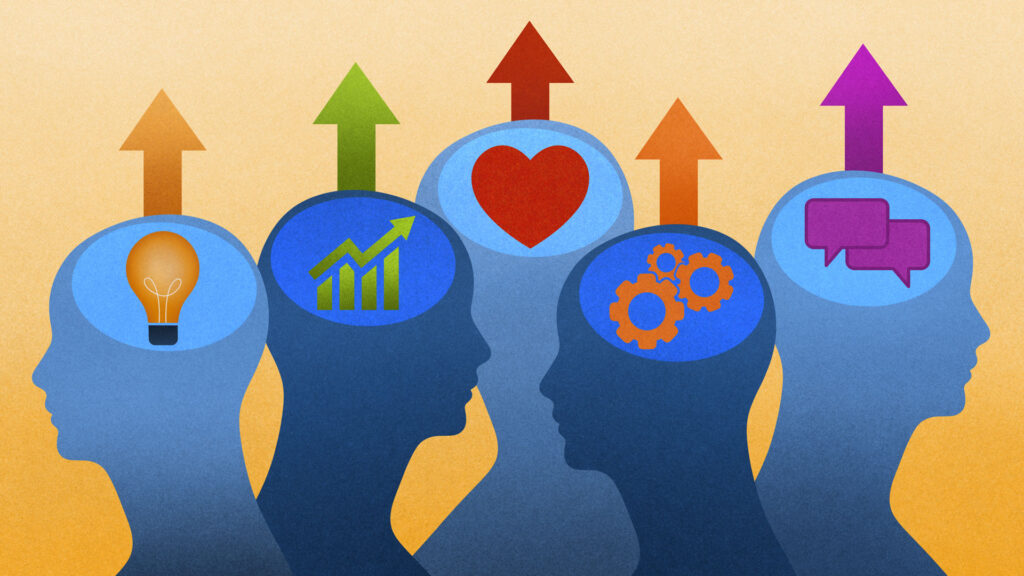
People's needs are differentCreating training programs for “soft skills, “such as interpersonal and communication skills, leadership, teamwork, or emotional intelligence, versus “technical areas,” such as finance and budgeting, coding, machine operations, engineering design, or data analytics, often requires different approaches due to the nature of the skillsets involved.

Here are items to consider:

•  Training Approach:

– Soft Skills: Often more discussion-based and interactive, utilizing role-playing, group activities, and reflective exercises.

– Technical Skills: Usually more structured, involving hands-on training, demonstrations, and practical exercises.

•  AssessmentMethods:

– Soft Skills: Assessment can be somewhat more subjective, often based on observations, self-assessments, and feedback from others.

– Technical Skills: Assessment is objective, based on tests, practical tasks, correct answers and approaches, or quantifiable results.

•  Training Content:

– Soft Skills: Content is often scenario-based, focusing on real-life situations and problem-solving.

– Technical Skills: Content is usually more factually or procedurally based, focusing on step-by-step processes and technical details.

•  Learning Curve:

– Soft Skills: Progress may be gradual and less tangible, as these skills typically develop over time through practice and real-world experience.

– Technical Skills: Progress often seems more linear and observable, with clear milestones as new technical competencies are acquired.

Note: for either set of skill areas, expect the trainee’s performance level to regress before it advances. Typically, there is a gestation time before new skills, abilities, and attitudes are fully adopted and happen on autopilot.

•  Instructor’s Role:

– Soft Skills: Instructors often act as facilitators, guiding discussions and encouraging self-reflection.

– Technical Skills: Instructors are likelier to be experts who impart specific knowledge and demonstrate techniques.

•  Learning Environment:

– Soft Skills: Training often happens in a collaborative environment, encouraging open discussion and sharing of experiences.

– Technical Skills: Training may occur within more controlled environments, like laboratories, cubicles, or specific training areas with the necessary equipment.

•  Adaptability and Customization:

– Soft Skills: Adapting the training to different groups is often more manageable since the general principles get applied across various contexts.

– Technical Skills: Training might need more customization to be relevant, especially if it’s specific to certain tools, technologies, approaches, business processes, or industry standards.

•  Continuous Learning:

– Soft Skills: These skill areas often require a commitment to providing and accepting ongoing development before becoming honed and improved throughout one’s career.

– Technical Skills: While continuous learning is essential, the subject often revolves around updating or expanding existing technical knowledge to remain relevant.

•  Impact Measurement:

– Soft Skills: For managers and leaders training their team members, measuring the impact can be challenging. It often requires them to commit to long-term observation and feedback mechanisms.

– Technical Skills: The impact is more straightforward to measure through immediate application and appropriate performance metrics or KPIs.

In summary, while both types of training are essential for professional development, their strategies, execution, and assessment methods differ considerably due to their inherent differences. Design it accordingly.

Posted in Training and Development | Tagged training

A Whole New World of Training and Development
NYC Executive Coaching avatarPosted on February 15, 2023 by Doug BrownFebruary 15, 2023

From my associate Grant Tate.

The pandemic threw all our neat organization designs up in the air. Now, at the beginning of 2023, leaders are trying to figure out the new structures to get work done. Leaders are experimenting with remote, office, hybrid, agile, matrix and other new schemes. Whatever the new form, we can never return to the good old days—the culture and organizational structures we had before 2020. A new day has arrived.

And there is turmoil in the workplace. The so-called “great resignation” saw many workers leaving their jobs, some going to other more lucrative or satisfying jobs, and many completely dropping out of the workforce.

As a result of these forces and other factors, a new cohort has been thrown into leadership or management roles. Many of these new entrants have little or no training or experience in leadership or management.

So, while new entrants lack training and development, other, more experienced leaders find themselves managing new structures, employees with new attitudes toward work, and technologies advancing at warp speed.

What does this mean for training and development?

We need a fresh look at the way we train leaders.

For the new (often young) new managers, we need to develop basic leadership skills and do it rapidly. That means an accelerated, skill-based leadership program that gives them what they need to effectively lead and manage their team and help them avoid hurtful or costly mistakes, especially in dealing with the people on their team. Practice and feedback should be important components of the program. After this fast-paced program, the new entrants will need an active coach to continue the skill-building process.

The already experienced leaders will need to reset and rethink their approaches and skills to adopt the techniques required in the new environment. This will require new mindsets and an openness to learn new techniques and methods. Existing leaders may have fallen behind in applying technology, performance management, feedback, and employee development.

All leaders will need to understand the basics of human psychology. That has not changed. But applying good human relations principles to new challenges means leaders must adapt those principles to new team-based, agile organizations that are adapting to rapidly changing economic and market environments.

Get on board. The train is already in motion.

Posted in Training and Development | Tagged development, training

Exploring Our Fit is Easy

We invite you to connect for a confidential, insightful discussion.

Free Executive Consultation

Call (908) 578-2457

Our Leadership Blog

Leadership Insights for the Real World
NYC Executive Coaching Logo

NYC Executive Coaching is the Coaching focused business unit of Paradigm Associates, LLC

Paradigm Associates

Executive Coaching Services

  • Executive Leadership Development
  • Fast Track Leadership Development
  • CEO Executive Coaching
  • Sounding Board Coaching
  • Executive Talent Assessment
  • Time Management Coaching

Social Sharing

Some of Our Clients

Grant Thornton Logo
WSP Logo
Conti Logo Green
J-C logo
GUARDIAN_LOGO
Givaudan_logo
Goodman
Withum
YMCA Logo
Nabisco
Ferreira Logo
Miner-logo-header
PSEG
NJ-Biz
View Logo List

Client Success Stories

As Chairman of the Board, I recently had the opportunity to work with Doug on a strategic planning effort for the New York Society of Association Executives. Doug was terrific in working with Association leaders. His high touch, vast knowledge of planning skills and focus on critical success factors was invaluable.
Michael Weamer
Michael WeamerPresident & CEO - The Marfan Foundation
Doug is an incredible coach. His insight is invaluable, and his process is creative and productive. He has an ability to see things in others that they might never find on their own. I can't recommend him highly enough!
Kyle Althof
Kyle AlthofSenior Administrator, The Metropolitan Museum of Art
Doug is a great coach. He gets you to think outside of the box and gives great scenarios as well as his past experiences in order to expand your views. He is very insightful. The creative methods and ways of thinking he incorporates into his coaching are beneficial in both a business and personal sense. His guidance has proven to be effective and I often think back to our sessions when making decisions and setting goals.I would recommend Doug as a coach to anyone looking to learn and grow as a manager, professional, or person.
Lauren Hayes, CSP
Lauren Hayes, CSPArea Manager at Peoplelink Staffing Solutions
Doug Brown is a leading edge conceptual thinker, a leader who has the ability to develop practical solutions to complex problems. Doug knows that it’s the people who must implement solutions; so as a master coach, teacher, and facilitator, he helps world-class leaders achieve even higher levels of performance. When facing complicated problems, Doug is out front with new and creative approaches. His breadth of experience runs the gamut from sales to strategy to organizational culture.
Grant Tate
Grant TateChief Strategist - the bridge, ltd
Doug ‘s keen insight and intellect helped me navigate many difficult business and personal decisions. Doug’s mentoring approach has provided me with exceptional value and guidance.
Jeffrey Egol
Jeffrey EgolSenior Finance Executive
See More Success Stories

© 2018 - 2026 Paradigm Associates LLC All Rights Reserved