


From my associate Grant Tate.
Understanding your clients/customers is the foundation of business development. Successful business development and sales depend on deeply understanding potential clients’ needs, preferences, and expectations. Integrating Artificial Intelligence (A.I.) can significantly enhance your ability to create precise and comprehensive client profiles, streamline sales strategies, and proactively address client requirements.
I agree. Deeply understanding are the key words. Years ago, one of my colleagues suggested that one should not “over research” a client because too much information would lead to confirmation bias, thus limiting your ability to ask open questions. Well, that’s one point of view. But going in naked without preparation was not my style. And, after all, wouldn’t a prospective client expect you to have done your homework?
That homework in the past included viewing the prospect’s website, public documents, investment reports, lists of products and services, news sources, LinkedIn profiles, and other sources. The process might have taken days to collect the information, copy it, and create a folder or binder.
Working with my trusty A.I. partner, that multi-hour process can now be accomplished in less than an hour.
Using ChatGPT, I set up a project that captures my uploads and facilitates multiple chats. Within this project, we will build a model of the prospective company.
We start a conversation. Not a “magical prompt.” A conversation.
Let’s start with the company’s website. Most of my clients are private companies with moderately-sized websites. We ask A.I. to download, extract, and analyze the website, describing the contents in detail. If my prospect is a division of the company, we could focus only on that portion of the site.
At this stage, A.I. and I discuss the market, the products and services, the company leaders, etc. That opens the door to ask A.I. to search its sources for more information about these topics, for instance, significant announcements, competitors, market outlook, significant issues, etc. From that, we can delineate significant challenges the business faces and its prospects for the future.
At this point, I usually ask for a preliminary SWOT analysis (Strengths, Weaknesses, Opportunities, and Threats).
If I am scheduled for a meeting with the CEO, for instance, A.I. can develop a detailed profile of that person, using LinkedIn and other sources. A.I. can prepare an outline of the interview session, including questions, cautions, primary focus of the meeting.
We may have identified other documents from past work—our own work products, processes, or techniques. I can add these to the A.I. project to help AI further prepare its answers.
Now, suppose new information has arrived—an email from the prospective client that lists some objectives of our upcoming meeting and a paragraph of her main concerns about the company. We upload that document to the A.I. project along with any other information we gathered. From this and the analysis so far, in conjunction with A.I., we can derive goals for a possible project for the client.
As you can see, the sophistication of the “model” is growing as we add additional data. Also, my questions and interactions are helping A.I. learn about my views and objectives about the project.
Now we can ask A.I. to develop a detailed program description for the client’s program with a detailed step-by-step process, and a timeline for implementation. If you have added your schedule of service or product fees to the A.I. project space, then you can proceed to ask A.I. for a complete proposal package.
At its core, business development is about relationships. People want to work with businesses that understand them and bring real value to the table. A.I. doesn’t replace that human connection—it strengthens it by giving you the insights and tools to show up prepared, engaged, and ready to help. And in today’s competitive world, that’s what really makes the difference.
At the beginning, I mentioned this was a conversation. Treating your interaction with A.I. as a conversation will expand your thinking and yield amazing results. Give it a try.
 This month, we focus on business development, the engine of sustainable growth. External factors such as market shifts, economic conditions, and intense competitive pressures play a crucial role; many of the most significant obstacles to effective business development are within a company’s control. However, these internal challenges often receive less attention than the external ones.
 Balancing everyday operational demands with strategic growth objectives is a persistent challenge for business leaders in all sizes of organizations. You might experience the pull between driving new business, delivering consistent quality, and ensuring your internal teams collaborate efficiently. Whenever you suspect that your current structure no longer supports your strategic goals—or if you spend more time on firefighting than innovation—consider rethinking how you organize roles and responsibilities.
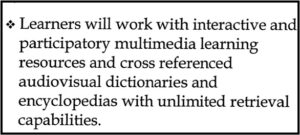 Individualized and Interactive Learning
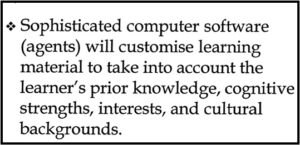 The Role of Technology
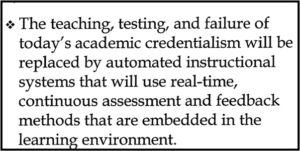 Assessment and Feedback
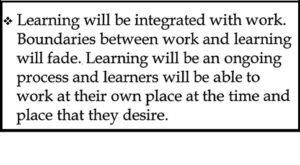 Integration of Work and Learning
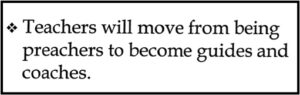 The Changing Role of Teachers
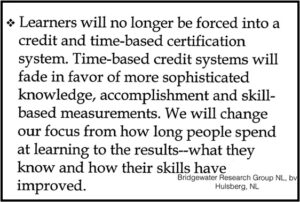 Areas Where Predictions Fell Short
 Did you know that organizations investing and excelling at leadership development and engaging their workforce aren’t just better places to work? They report 21% higher profitability and a 17% higher productivity rate. In today’s volatile business environment, leadership resilience isn’t optional—it’s a competitive necessity.
 Experiencing natural disasters and personal loss—whether by hurricanes, floods, tornadoes, fires, or health-related causes—brings profound disruption that touches every part of our lives. These moments remind us of our shared vulnerability and capacity to support one another. Such events test our resilience, decision-making, and capacity for empathy, both personally and professionally. In times like these, leadership becomes less about managing tasks and more about courageously guiding people—and ourselves—through uncharted waters. Here’s how we, as leaders, can better support ourselves and our teams during crises and their aftermath, blending practicality with compassion.
 A Lesson in Forces
 From my associate, Janice Giannini.
 As organizations grow, the complexity of operations increases exponentially. Without suitable systems, this complexity can quickly become overwhelming, leading to inefficiencies, bottlenecks, and a decline in overall performance. In this second article of our series, we focus on the critical importance of building scalable systems and processes, as outlined in Designed to Scale.