
Early Warning Signs
Peering forward into 2022. It may be the most challenging role for all organizational leaders. Over the years, I’ve written many articles about the


Peering forward into 2022. It may be the most challenging role for all organizational leaders. Over the years, I’ve written many articles about the

From my associate Grant Tate. A couple of days ago, I participated in a conversation with Bob Woodward and his wife, Elsa Walsh where

I think of December as a time of reflection and renewal. It’s a time to Reflect on this past year across its many dimensions. It’s an

Even while daylight is getting shorter and the days colder, I love this time of year because I am inspired to take the time

From my associate Janice Gianinni. An important topic of discussion lately is the current level of misunderstanding and contentiousness in work, social and political

Submitted by Eileen Nonemaker. “The hammers must be swung in cadence when more than one is hammering the iron.” -Giordano Bruno, c. 1548-1600, Italian

Submitted by Janice Giannini. I recently read the Middle Market Growth’s special report titled Future of Work 2021. The report addressed post-pandemic realities across

If history has taught us anything, it has demonstrated that business can be disrupted, at any time, by any number of chaotic circumstances: supply

For many corporate leaders, the last 18 months have been an exercise in living through stress. The situation concerning the pandemic changes day-to-day, and

Contributed by our associate Grant Tate. Leaders today are facing unprecedented uncertainty. Developing long-range plans in this environment can seem like a futile exercise.

When pondering “making up for the lost year”, it is important to understand what you lost and what might be recoverable. It may be

Yes, 2020 was a lost year for many of us, a time warp, a wrinkle in time, a year of lost friends and family

When I think back to all the mentoring I received throughout my working life, the number of relaxed, informal, yet informative conversations have been

Authored by Bill Kille. When I say wrinkles, I mean the literary version of the word, i.e., a clever or novel idea or device. Over

Authored by Janice Gianinni. As pandemic restrictions lift, employees and companies are planning or preparing to return to the office. A common concern arising

Really? Yep. For certain aspects of a business, managing using emotions can be detrimental compared with a more disciplined approach. Regarding business decisions related

Authored by Janice Giannini. When the stay at home orders came out last year, many of my friends and I were lamenting the: Need

“It’s impossible to wear out your gifts, because the more you use them the stronger they become.” – Dr. Dale Henry Many of us

Authored by Eileen Nonemaker. Most of my coaching clients have been trying to reach specific tangible goals either professional or personal. When DJ reached

This illustration may reflect almost any issue with which you and I have a strong personal connection. As simple as it looks on

Healthcare is one of the most complex and challenging industries. It is constantly undergoing change from both external and internal stimuli: evolving regulations, new technologies,

What follows is the result of our continuing conversations with company leaders from all over the world. To make it easier on all of us to compartmentalize and process, these thoughts and considerations have been grouped into related areas.

It may be a funny word when we first hear it. But when we let the impact sink in, it may be one of

As I walked outside first thing on this crisp autumn morning, I stopped to look around and take in my surroundings. For our family’s

Commit to accomplishing at least one personal or professional development activity every month. Whether reading from a different source than usual, listening to a new
Personally and professionally, we have probably gone through such disruption in so many aspects of our lives, that very little is left unchanged.
Employee engagement doesn’t have to be relegated to some soft-headed, everybody-feelgood- and-sing-Kumbaya moments. It can deliver pragmatic outcomes that most execs would die for.
In previous columns, I have touched on the need to manage change and transitions, own your customers’ experience, prioritize and publish a list of corporate goals and objectives, truly engage your people, and view your organization’s economic playing field differently. This column brings them together.
Cost containment has become the mantra over the last several years for almost everyone. People have been accepting the thought, sometimes reluctantly, that they need to do what it takes to survive the downturn.

We were aware that any time people operate multiple locations or divisions, they are subject to a potential culture clash. But in preparing to help a build a team within a multinational client, we realized this can apply to much smaller organizations, even those operating locations across the street from each other.

I’ll address one shortcoming in this article: not publicizing a list of corporate goals and objectives in priority order. Without a public list like this, people at every level of the organization are forced to guess at the most important criteria for making decisions.
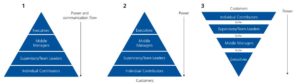
Whether they refer to them as raving fans, zealots for their business, loyal customers, or long-term clients, most executives today are trying to ensure their companies get and keep profitable customers.

How would we be operating our enterprise if we were going through a turnaround right now? That led me to think about achieving transformation by thinking differently— without going through the massive pain and suffering a turnaround typically involves.
For example, when I ask executives, “What is your unique differentiation in the marketplace?” or “What does your organization really excel at?” they often reply, “It has to be our customer service.” Almost no one will admit to being lousy in customer service, anymore than they will talk about living in an average town with average kids.

A Lesson from Mother Nature Nature provides an endless supply of lessons. Ways for us to be more effective. Allow me to share this
I have been observing people in power for quite a while, long before the latest public official made, shall we say, an error in judgment and

I am hesitant to refer to passion as a management tool because I don’t want to advocate manipulation in its most negative form. Instead, I want you to approach this as a form of booster rocket that you can adapt and use to get to where you want to go faster.

I have noticed a troubling pattern. Despite how intellectually bright executives are at the top of the house, they seem to be suffering from one or more blind spots that color their view and inhibit their judgment.
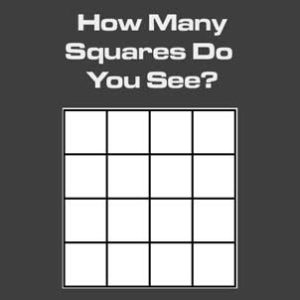
Things are not always the way they first appear. Here’s a short exercise to test your open mindedness. How did you do? What new

“In five years, you’ll be exactly where you are today, except for the people you meet and the books you read.” Unless we consciously do something to change our thinking, we will be stuck where we are.