NYC Executive Coaching Logo

Results Driven Leadership Development

NYC Executive Coaching Logo

Results Driven Leadership Development

  • Home
  • About
    • Our Approach to Executive Coaching
    • Our Clients
    • Our Coaches
    • Client Success Stories
    • Our Locations
    • Our Values
    • Our Affiliations
  • Our Services
    • Executive Leadership Development
    • Fast Track Leadership Development
    • CEO Coaching
    • Sounding Board Coaching
    • Executive Talent Assessment
    • Time Management Coaching
  • Blog
  • Contact
  • Home
  • About
    • Our Approach to Executive Coaching
    • Our Clients
    • Our Coaches
    • Client Success Stories
    • Our Locations
    • Our Values
    • Our Affiliations
  • Our Services
    • Executive Leadership Development
    • Fast Track Leadership Development
    • CEO Coaching
    • Sounding Board Coaching
    • Executive Talent Assessment
    • Time Management Coaching
  • Blog
  • Contact

Category Archives: Strategic Thinking

Post navigation

Newer posts →

Ideas to Think About For Moving Forward

NYC Executive Coaching avatarPosted on November 3, 2020 by Doug BrownNovember 6, 2020
Moving Forward

What follows is the result of our continuing conversations with company leaders from all over the world. To make it easier on all of us to compartmentalize and process, these thoughts and considerations have been grouped into related areas.

Read More
Posted in Strategic Thinking | Tagged effective leadership

Seasons Change. Do We?

NYC Executive Coaching avatarPosted on October 22, 2020 by Doug BrownOctober 22, 2020

As I walked outside first thing on this crisp autumn morning, I stopped to look around and take in my surroundings. For our family’s trees creating an overhead canopy, it is quickly approaching peak color change season for the leaves. … Read More

Posted in Strategic Thinking

Fix the Toaster

NYC Executive Coaching avatarPosted on March 20, 2019 by Doug BrownJanuary 21, 2019

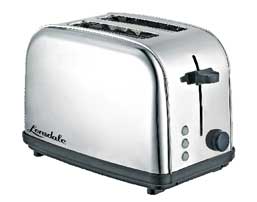
ToasterDo you want to fix the toaster or keep scraping the burnt part off the toast? It seems like a simple question, but hear me out. If we believe the premise that we get what we accept, the notion that we would continue to accept an unacceptable outcome rather than addressing the core problem is almost laughable. Now, let’s take that experience into our corporate hallways.

Cost containment has become the mantra over the last several years for almost everyone.  People have been accepting the thought, sometimes reluctantly, that they need to do what it takes to survive the downturn.  So far, so good.

But have you asked yourself where examples of non-productive behavior have started to creep in as people battle the problems caused by the way you’re doing business now? How are past decisions to defer preventive maintenance starting to show their impact? Where are people in your organization falling further and further behind serving customers, making shipments, or completing their work because staff was reduced without corresponding process improvements being put in place to compensate?

Here is another simple question. Where are you asking people to roll bowling balls uphill every day just to get things done?  Are other leaders in your organization even noticing this has become commonplace? Are they stopping to wonder why their people are burning out and don’t seem as committed as they once were?

These questions may seem ridiculous and obvious at first blush. But many people get so caught up in the day-to-day that they don’t look at the impact their decisions are having on those who are simply trying to make a living and feed their families.

I compare it to driving a speedboat across a lake. Someone can be so focused on quickly getting to the other side that they don’t notice their wake is flooding all the properties along the shoreline.

If your organization put process improvement initiatives on hold during the downturn, it’s time to take a fresh look at opportunities. While looking for areas to explore, here is a suggestion. Take a look at how your senior executives are running the business.

How seamlessly does your organization really operate? I am prompting you to go much deeper in your thinking process than whether or not you have an up-to-date org chart. You and your top team need to examine whether or not your organization is really coalescing around the best ways to get things done.

Looking at how things are actually getting done in a department or division versus how they are supposed to be done can be quite enlightening. While some people may smile and say, “Great job innovating, team. This
is an example of employee engagement at its best,” others will be shocked to learn that many of the checks and balances they thought were in place are being ignored for the sake of expediency.

Where do you expect your firm to be on that continuum of discovery when you take the time to examine it? Are your teams operating like a well-oiled kanban system or more like TV’s F Troop?

If the answer is not what you had hoped for, take a look at how easy it is for someone at any level to get things done. Examine your processes for efficiency and effectiveness both vertically (relationships with people above or below in the hierarchy) and horizontally (across functional disciplines).

Are you going to fix the toaster, or do you want your people to keep scraping off the toast?


This article originally appeared in American Executive Magazine

Posted in Strategic Thinking

Turnaround Thinking

NYC Executive Coaching avatarPosted on January 20, 2019 by Doug BrownJanuary 21, 2019

A recent presentation I attended triggered this thought:

How would we be operating our enterprise if we were going through a turnaround right now?

More Urgency, Less Pain

That led me to think about achieving transformation by thinking differently—without going through the massive pain and suffering a turnaround typically involves.

The causes of corporate decline include external factors such as negative changes in demand, increased competition, and changes in the cost structure or cost of goods due to rising commodity prices. Internal causes are typically issues such as poor management decisions, organizational inertia, inadequate financial controls, or ineffective marketing and sales efforts.

Applying Turnaround Thinking to Your Strategy

  • Turnaround_StrategyCan we mobilize ourselves to take advantage of the positive aspects this level of intensity and scrutiny brings?
  • Do we have to feel extreme stress and anxiety before we can move forward?
  • Do we have to rely on our own past experience because we haven’t made time to tap into the collective wisdom of our organization?

I certainly hope not.

When Kenneth Chenault was appointed a division president for American Express in 1993, he called his top team together and asked a question I still consider profound.

“Ladies and gentlemen, what kind of company could put us out of business, and what do
we have to do to become that company?”

That simple question, it seems, led to the reinvention of American Express Travel from top to bottom, with dramatic financial results. I believe the power was in the question as much as in the answers it spawned.

Think Fast

When I think of organizational transformation, I consider a broad range of subjects, including brand image and the customer loyalty it fosters. Think of this: if you were starting your business today but were allowed to know what you currently know, is your current brand image the image you would set out to create? If not, what changes would you want to make? Which of those changes are necessary and which are merely desirable?

When applying financial metrics such as assets, liabilities, retained earnings, working capital, EBITDA, and ratios appropriate to your segment, you can see indicators of performance as the guideposts they are. What needs to be done in the short and intermediate term? Where are your high-cost processes that add little customer value? Where are your slow processes that get in the way of satisfying your customers?

If you were starting your business today but were allowed to know what you currently know, is your current brand image the image you would set out to create? If not, what changes would you want to make?

When I think organizational issues, I think about the role senior executives play in shaping organizational culture. Is the behavior of the senior team indicative of what the organization is trying to achieve in the way it is trying to achieve it? Ask yourself, “Would the organization be better or worse if everyone behaved and operated exactly like the senior leadership?”

If your answer is that you’re not sure, you need to look at whether or not the organization is consistently supporting and rewarding the behaviors needed while extinguishing the undesirable behaviors.

Here are a few more questions to ask yourself:

  • Question IconDoes your structure totally support your strategy, with all people and processes in
    alignment?
  • Does your leadership consistently promote and reward a culture that engages and
    excites people toward achieving organizational targets in a way that makes them
    want to come to work every day?
  • If most of the people in your company hit the lottery with a huge win, would they
    come to work the following day?

If you thought “Who are you kidding?” after that last question, you need to take a long
hard look at how you are managing your human assets. Your future may depend on it.

Posted in Leadership Development, Strategic Thinking

Own Your Customer

NYC Executive Coaching avatarPosted on November 5, 2018 by Doug BrownMarch 13, 2019

As someone who has been heavily involved in facilitating strategic planning processes with organizations during the last 20 years, I often find humor in the way people answer the questions I pose.

Excellent Customer ServiceFor example, when I ask executives, “What is your unique differentiation in the marketplace?” or “What does your organization really excel at?” they often reply, “It has to be our customer service.”

Lake Wobegone syndrome

Almost no one will admit to being lousy in customer service, anymore than they will talk about living in an average town with average kids. It’s the Lake Wobegone syndrome. As fans of the radio show know, in Lake Wobegone, “All the women are strong, all the men are good-looking, and all the children are above average.”

As I get to know a company, I sometimes ask, “If I hauled you into a court of law and accused you of being a world-class customer service provider, would there be enough evidence to convict you?” Many times, unfortunately, their answer is, “Probably not.”

So here’s the question. If so many executives think customer service and improving customer loyalty numbers are critical to the execution of their organization’s strategic plan, why aren’t those indicators monitored with
the same intensity as the company’s financials? After all, financials are usually a lagging indicator while customer satisfaction and loyalty may be leading indicators of the future condition.

In 1960, Harvard B-School Professor Emeritus Theodore Levitt wrote a groundbreaking article called “Marketing Myopia.” To paraphrase, he concluded that the purpose of all business is to attract and maintain customers while generating adequate profitability today and improved profitability in the future. That balancing act still holds true.

Organizations that still don’t see customer loyalty as a point of strategic differentiation may be looking at their business through the lens of short-term focus. Knowing and communicating the lifetime value of a typical
customer to the staff can provide them a framework for maintaining customer relationships, rather than looking at them from a transactional basis.

Take the time to discover why customers buy from your company, determine expectations for their customer experience, and ensure you have processes and people in place to grow loyal customers.

We recommend that organizations take ownership of the entire customer experience and have a process in place for service recovery, if needed. Too many companies today are sliding toward the it’s-probably-good-enough operating model regarding their processes, technology, and staff.

Exasperation!

Here’s an example. I had a car, still under factory warranty, that broke down about 25 miles from my home. While it was being loaded onto a flat-bed truck to go back to my dealer, the towing company damaged another part of the car.

The dealer was willing to go ahead and fix the damage, but the towing company wanted the damage they caused handled by their own insurance carrier. They had a local agent connected to an insurance company in Arizona. The problem was that the local agent did not have the necessary claim number or phone number for the insurance company agent handling the claim in Arizona.

Therefore, the dealer, who was willing and able to fix the car, didn’t have the information it needed to work with the towing company.  As a result, repairs that could have been completed in 48 hours took almost six weeks.

The problem was that no one owned my entire customer experience—each company only owned a piece of it. Any time there was an opportunity for a hand-off where something could go wrong, the companies relied on me (with no technical knowledge of the situation) to handle the details.

This felt like lunacy to me. Where could that type of frustration be happening with your organization’s customers or in your supply chain?

Posted in Strategic Thinking

Post navigation

Newer posts →

Exploring Our Fit is Easy

We invite you to connect for a confidential, insightful discussion.

Free Executive Consultation

Call (908) 578-2457

Our Leadership Blog

Leadership Insights for the Real World
NYC Executive Coaching Logo

NYC Executive Coaching is the Coaching focused business unit of Paradigm Associates, LLC

Paradigm Associates

Executive Coaching Services

  • Executive Leadership Development
  • Fast Track Leadership Development
  • CEO Executive Coaching
  • Sounding Board Coaching
  • Executive Talent Assessment
  • Time Management Coaching

Social Sharing

Some of Our Clients

Grant Thornton Logo
WSP Logo
Conti Logo Green
J-C logo
GUARDIAN_LOGO
Givaudan_logo
Goodman
Withum
YMCA Logo
Nabisco
Ferreira Logo
Miner-logo-header
PSEG
NJ-Biz
View Logo List

Client Success Stories

As Chairman of the Board, I recently had the opportunity to work with Doug on a strategic planning effort for the New York Society of Association Executives. Doug was terrific in working with Association leaders. His high touch, vast knowledge of planning skills and focus on critical success factors was invaluable.
Michael Weamer
Michael WeamerPresident & CEO - The Marfan Foundation
Doug is an incredible coach. His insight is invaluable, and his process is creative and productive. He has an ability to see things in others that they might never find on their own. I can't recommend him highly enough!
Kyle Althof
Kyle AlthofSenior Administrator, The Metropolitan Museum of Art
Doug is a great coach. He gets you to think outside of the box and gives great scenarios as well as his past experiences in order to expand your views. He is very insightful. The creative methods and ways of thinking he incorporates into his coaching are beneficial in both a business and personal sense. His guidance has proven to be effective and I often think back to our sessions when making decisions and setting goals.I would recommend Doug as a coach to anyone looking to learn and grow as a manager, professional, or person.
Lauren Hayes, CSP
Lauren Hayes, CSPArea Manager at Peoplelink Staffing Solutions
Doug Brown is a leading edge conceptual thinker, a leader who has the ability to develop practical solutions to complex problems. Doug knows that it’s the people who must implement solutions; so as a master coach, teacher, and facilitator, he helps world-class leaders achieve even higher levels of performance. When facing complicated problems, Doug is out front with new and creative approaches. His breadth of experience runs the gamut from sales to strategy to organizational culture.
Grant Tate
Grant TateChief Strategist - the bridge, ltd
Doug ‘s keen insight and intellect helped me navigate many difficult business and personal decisions. Doug’s mentoring approach has provided me with exceptional value and guidance.
Jeffrey Egol
Jeffrey EgolSenior Finance Executive
See More Success Stories

© 2018 - 2026 Paradigm Associates LLC All Rights Reserved